How to Unlock a Washing Machine Door: 7 Safe Steps
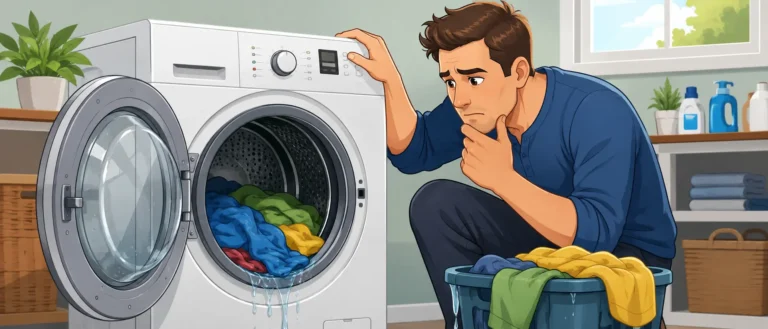
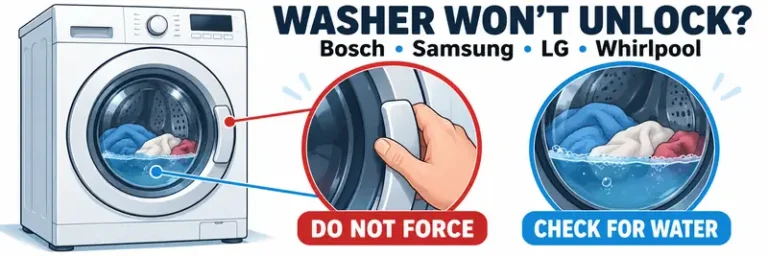
If your washing machine door won’t open, do not force the handle. The safety lock may still be active because the drum is moving, the water is too hot, water remains inside or child lock is switched on.
To learn how to unlock a washing machine door safely, start by waiting a few minutes, pausing the cycle and checking whether the drum has drained. Only use an emergency release when the instructions for your exact model confirm that it has one. A loose handle or recurring lock error may need professional repair.
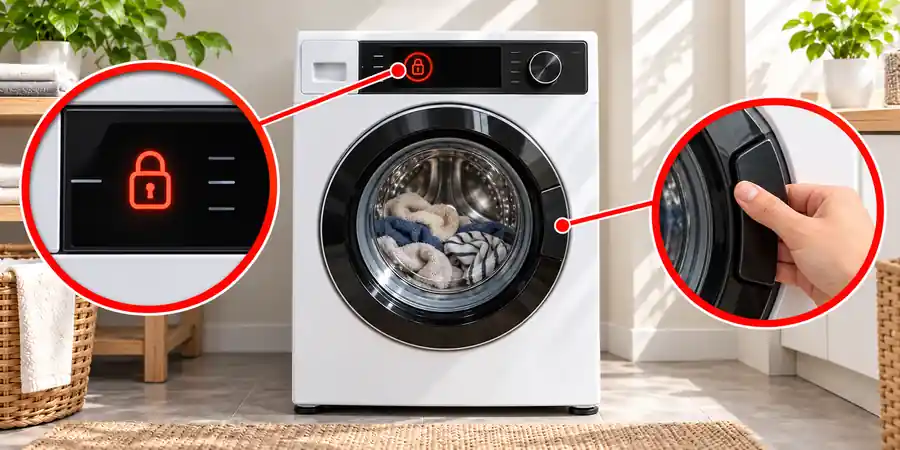
How to Unlock a Washing Machine Door Safely
If your washing machine door won’t open, do not pull the handle harder. The door may still be locked because the drum is moving, the water is too hot, water remains inside or the control system has not completed its safety check.
Start with the simplest checks below and only use a manual release if your machine’s instructions confirm that it has one.
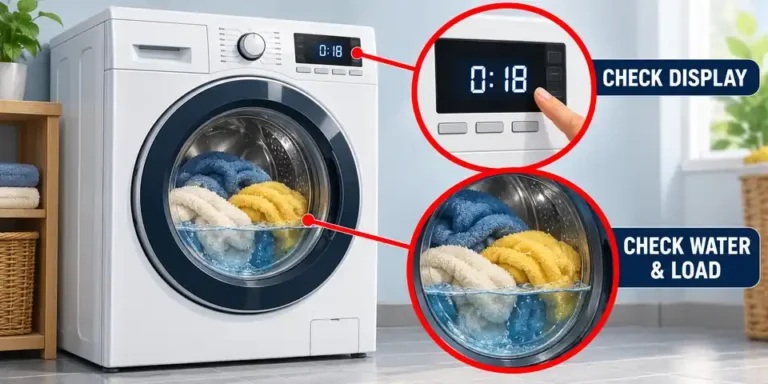
Do not try to open the door while the drum is moving, the glass feels hot or water is visible above the bottom of the door.
| What you notice | What to try first |
|---|---|
| The cycle has just finished | Wait a few minutes for the safety lock to release |
| The machine is paused mid-cycle | Press Start/Pause and wait until the drum stops |
| A key, padlock or “CL” appears | Check whether child lock or control lock is active |
| Water remains in the drum | Run a Drain or Drain/Spin programme |
| The display has frozen after a power cut | Switch off, unplug and allow the controls to reset |
| The handle feels loose or does not move normally | Stop pulling and have the handle or interlock checked |
1. Wait for the Door Lock to Release
Many front-loading washing machines keep the door locked briefly after the programme ends. This delay gives the drum time to stop and allows the machine to confirm that the water level and temperature are safe.
Wait two to five minutes before trying the handle again. A hot wash may require a longer cooling period. Listen for a click from the door area, but do not repeatedly pull the handle while waiting.
If the door opens after this delay, the machine was probably operating normally. A release delay by itself does not mean the lock is faulty.
2. Pause or Cancel the Wash Cycle
If you need to open the door during a programme, press Start/Pause once and wait for the drum to stop completely. Some machines unlock after a short pause, while others require the programme to be cancelled or the water to be drained first.
The door will usually remain locked when:
- The drum is still turning.
- The water level is high enough to spill through the door.
- The water is too hot to touch safely.
- A steam, drying or sanitising stage is running.
Do not switch programmes rapidly or press several buttons at once. Give the machine time to respond to the first command. Samsung’s official door-opening guidance explains that supported models may unlock after pressing Start/Pause, but only when the water level and temperature are safe.
3. Turn Off Child Lock or Control Lock
Child lock and the physical door lock are not the same feature. Child lock normally disables the control-panel buttons. On some front-loading models it can also affect whether the door opens. The door interlock physically holds the door closed during an unsafe part of the cycle.
Look at the display for a child-lock message or symbol, but remember that there is no universal icon. Depending on the brand and model, the machine may show a key, a padlock, “CL”, a face symbol or written text.
Use the button combination printed on the control panel or shown in the user manual. It commonly requires holding one or two buttons for about three seconds, but the correct buttons differ between models. Do not copy a button combination from a different washing machine simply because it is the same brand.
After turning child lock off, press Start/Pause if necessary and wait for the normal door-lock delay to end.
4. Drain Any Water Left in the Drum
A washing machine door often stays locked because the pressure or water-level system detects water inside. Select Drain, Pump Out or Drain/Spin, depending on the wording on your control panel.
If the programme runs and the water disappears, wait for the lock to click before opening the door. If the drum does not drain, there may be a blocked filter, kinked drain hose or pump problem. Follow the checks in our guide to a washing machine not draining before assuming that the door lock has failed.
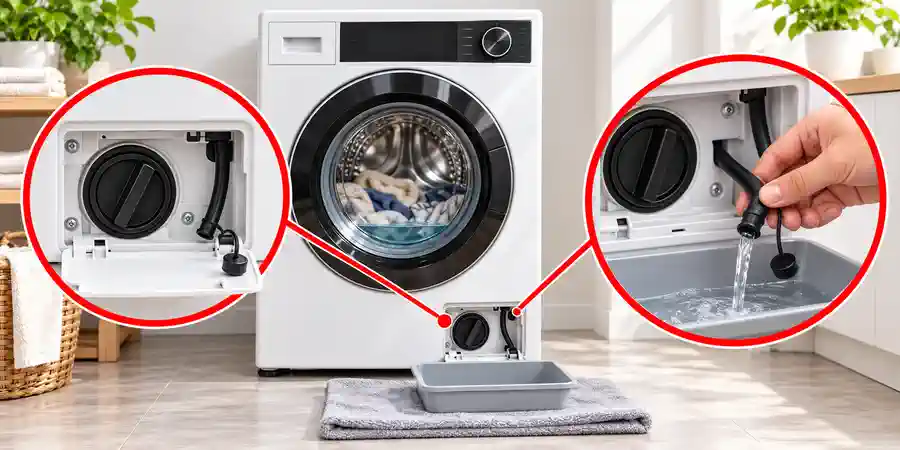
If the machine will not run a drain programme:
- Switch it off and unplug it.
- Allow hot water to cool.
- Place towels and a shallow container in front of the pump-filter flap.
- Use the emergency drain hose if your model has one.
- If the manual identifies the pump filter as user-removable, loosen it very slowly so the water can be collected in small amounts.
Do not remove the filter in one movement when the drum is full. Several litres of water may escape quickly. If you cannot control the water safely, stop and contact an appliance engineer.
5. Reset the Washing Machine
A power interruption or control error can leave the washing machine door locked even after the programme has stopped.
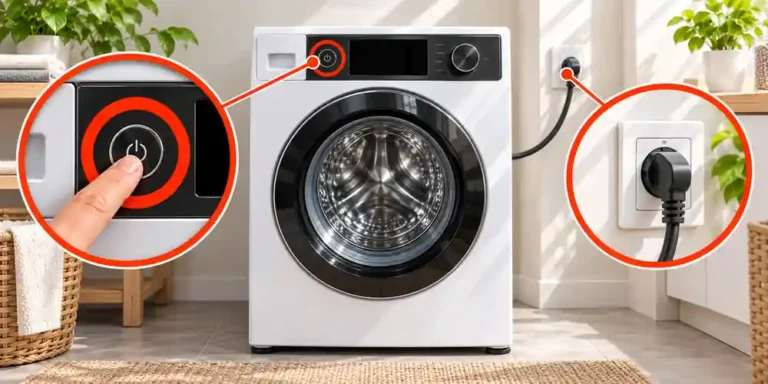
Turn the machine off with its power button, unplug it and leave it disconnected for about five minutes. Reconnect the power, switch the machine on and select Drain or Cancel if the display returns normally.
Unplugging the machine is not a guaranteed release method. Some door locks need time to cool, while others will stay locked until the machine confirms that the water has drained. Do not keep reconnecting the plug repeatedly if the door remains locked or the same error code returns.
6. Check the Handle and Door Catch
Look closely at the handle without forcing it. A handle that feels unusually loose, remains pulled outward or makes a cracking sound may be broken. The door hook can also become misaligned or trapped by clothing caught between the door and rubber seal.
If the handle feels normal, press the door gently towards the machine and then try the release once. This can remove light pressure from the catch. Do not lean heavily against the door or pull it from different angles.
Stop if the handle bends, the trim separates or the door remains firmly held. Using a knife, screwdriver, bank card, wire or string around the door can damage the seal, glass, wiring or lock assembly.
7. Use the Emergency Door Release Only If the Manual Confirms It
Some front-loading washing machines have a manual emergency-release tab or cable behind the lower pump-filter cover. Other machines do not have an accessible release, and its position is not standard.
Before using an emergency release:
- Switch off and unplug the washing machine.
- Make sure the drum has stopped completely.
- Drain all visible water.
- Wait until the door glass and water are cool.
- Check the instructions for your exact model number.
Beko, for example, states that selected models have an emergency handle beneath the pump-filter cover, but that does not mean every Beko or every washing machine uses the same system. See Beko’s official washing-machine door-release guidance and then check your own model manual. www.beko.co.uk
Pull only the part identified by the manufacturer and use the direction shown in the manual. If you cannot find a confirmed release, do not dismantle the cabinet to search for one.
Why the Washing Machine Door Won’t Open After the Cycle
A door that remains locked after the final beep does not always have a broken lock. The machine may still be responding to another fault or safety condition.
Common reasons include:
- Water has not drained: The machine keeps the door closed to prevent flooding.
- The water is still hot: High-temperature cycles can extend the locking time.
- The final spin did not finish: An unbalanced load or interrupted programme may stop the cycle before its normal release stage.
- Child lock is active: The controls may not respond until the feature is switched off correctly.
- The power failed: The control board may not have completed the unlock command.
- The handle, catch or interlock is damaged: The door cannot release even though the programme has ended.
- A sensor or control fault is present: The machine may incorrectly detect water, heat or movement.
If the clothes are soaking wet and the machine did not complete its final spin, check the causes in our washing machine not spinning guide. Solving the drainage or spin problem may also allow the door to release normally.
Check the Washing Machine Door Lock Mechanism
Most modern front-loading machines use an electrical door interlock. When the door closes, a hook on the door enters the lock assembly behind the front panel. The control board activates the interlock at the start of a programme and releases it only when opening the door is considered safe.
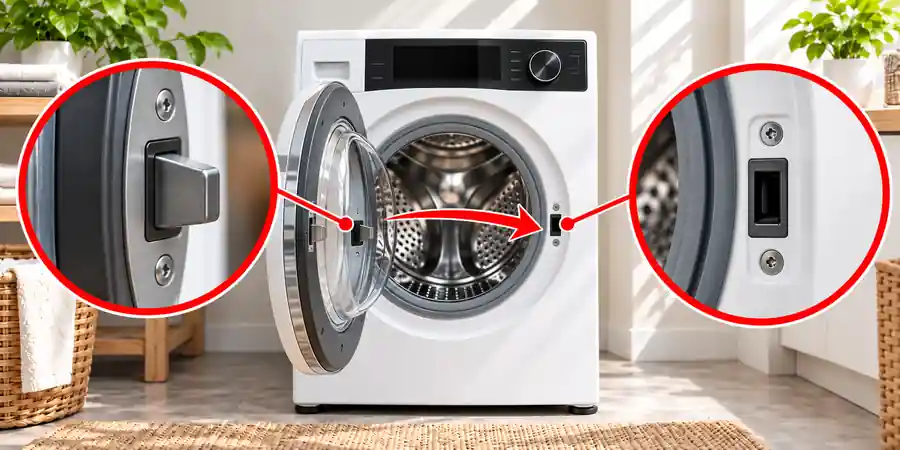
This physical lock is different from the handle, child lock and display indicator:
- The handle moves the door hook.
- The door catch or hook enters the locking assembly.
- The electrical interlock holds the hook during operation.
- The child or control lock disables selected controls.
- The door-lock indicator only reports the machine’s current status.
Brands use these parts and indicators differently:
- Samsung: Many models automatically lock the door when water is present or the temperature is unsafe. Supported models may release after Start/Pause, but only after the safety conditions have cleared.
- LG: Many front-loading models have a door-lock indicator. The door can remain locked after a hot programme until the drum has cooled.
- Beko: The loading door is normally locked before the programme starts and released at the end. Some models also provide a manual emergency handle near the pump filter.
- Hotpoint and Indesit: Selected models use a replaceable door interlock, also described as a door lock or door catch. On some models, an F06 code can indicate a door-lock problem.
- Bosch: Some models use an electrical or magnetic door lock. A key or “CL” on the display may instead indicate child lock, so it should not automatically be treated as a door-lock fault. www.samsung.com
The exact part, error code and release procedure depend on the model, not just the brand. Find the full model number on the rating label around the door opening, behind the door or in the manual before ordering a lock or following brand-specific instructions.
A failed interlock may be suspected when the machine will not start despite the door being closed, the door never produces its normal locking click, a lock error returns after a reset or the door remains locked after the water has drained and the machine has cooled. Replacing an interlock involves mains-voltage wiring, so it is a job for someone competent to work safely on appliances.
Can You Open a Washing Machine Door Mid-Cycle?
You can open some washing machines during a cycle, but only when the machine itself releases the lock after being paused. Press Start/Pause and wait. If the lock remains engaged, there is usually a safety reason.
A front-loading door should not open when the water level is above the bottom of the door, the drum is moving or the temperature is unsafe. A top-loading machine may also keep its lid locked during high-speed spinning.
Do not use a manual emergency release simply to add a forgotten item. That release is intended for specific situations described by the manufacturer, such as a power failure after the water has been safely drained.
What Not to Do When the Washing Machine Door Is Stuck
Avoid methods that defeat the safety lock or place pressure on the door assembly. They can turn a simple drainage problem into a broken handle, damaged seal or flooded floor.
Do not:
- Force or repeatedly jerk the handle.
- Pry the door with a screwdriver, knife or bank card.
- Feed string or wire around the door to pull the catch.
- Bypass the interlock or connect its wires together.
- Remove cabinet panels while the machine is plugged in.
- Activate an emergency release while water is visible in the drum.
- Tip or move a water-filled machine to reach the lock.
If water is escaping around the door, filter or base of the appliance, deal with the leak before running another programme. Our guide explains why a washing machine may be leaking and the safe checks to make first.
When to Call an Appliance Engineer
Stop troubleshooting and arrange a repair when:
- The handle, door hook or trim is cracked or loose.
- The door will not lock and the washing programme cannot start.
- The door stays locked after the drum is empty, cool and fully stopped.
- The same door-lock error returns after one power reset.
- The machine trips the electrical supply, smells burnt or makes a buzzing sound near the lock.
- Water is leaking around the lock, seal or electrical area.
- The emergency release is damaged, inaccessible or not described in the manual.
Do not order a replacement interlock using the brand name alone. Two machines from the same manufacturer can use different locks, wiring and release methods. Match the complete model and production numbers, or ask the manufacturer or repairer to identify the correct part.
Frequently Asked Questions
How long does a washing machine door take to unlock?
It often releases within two to five minutes after the cycle ends. A hot wash, water left in the drum or an unfinished programme can keep it locked for longer. Wait for the drum to stop and listen for the lock to click before using the handle.
Why is my washing machine door locked with water inside?
The lock is preventing water from spilling through the door. Run a Drain or Drain/Spin programme. If the water remains, check the pump filter and drain hose before investigating the lock itself.
How do you unlock a washing machine door after a power cut?
Restore the power when it is safe to do so, then select Drain or Cancel and wait for the normal lock delay. If the power remains off, drain the water and use a manual release only when the instructions for the exact model provide one. Unplugging alone will not override every safety lock.
Does the key symbol mean the washing machine door is locked?
Not always. On some models a key, padlock or “CL” indicates child lock or control lock rather than the physical door interlock. Check the symbol guide for the exact model before pressing buttons or diagnosing a lock fault.
Where is the emergency release on a washing machine?
Some front-loading machines place a release tab or cable behind the lower pump-filter cover. Other models use a different location or do not provide a user-accessible release. Drain and unplug the machine, then follow only the instructions for its exact model.
Can I open a washing machine door with a broken handle?
Do not force it or insert tools around the door. A broken handle may no longer move the catch correctly, and extra pressure can damage the glass, seal or interlock. Drain the machine and arrange a repair using the correct model information.
Why does the washing machine door keep getting stuck?
Repeated locking can point to poor drainage, a failing handle, a worn door catch, a faulty interlock or an incorrect water-level reading. Record when it happens and any error code shown. A recurring fault needs diagnosis rather than repeated power resets.
2 Comments
Comments are closed.