Washing Machine Not Spinning? How to Fix It
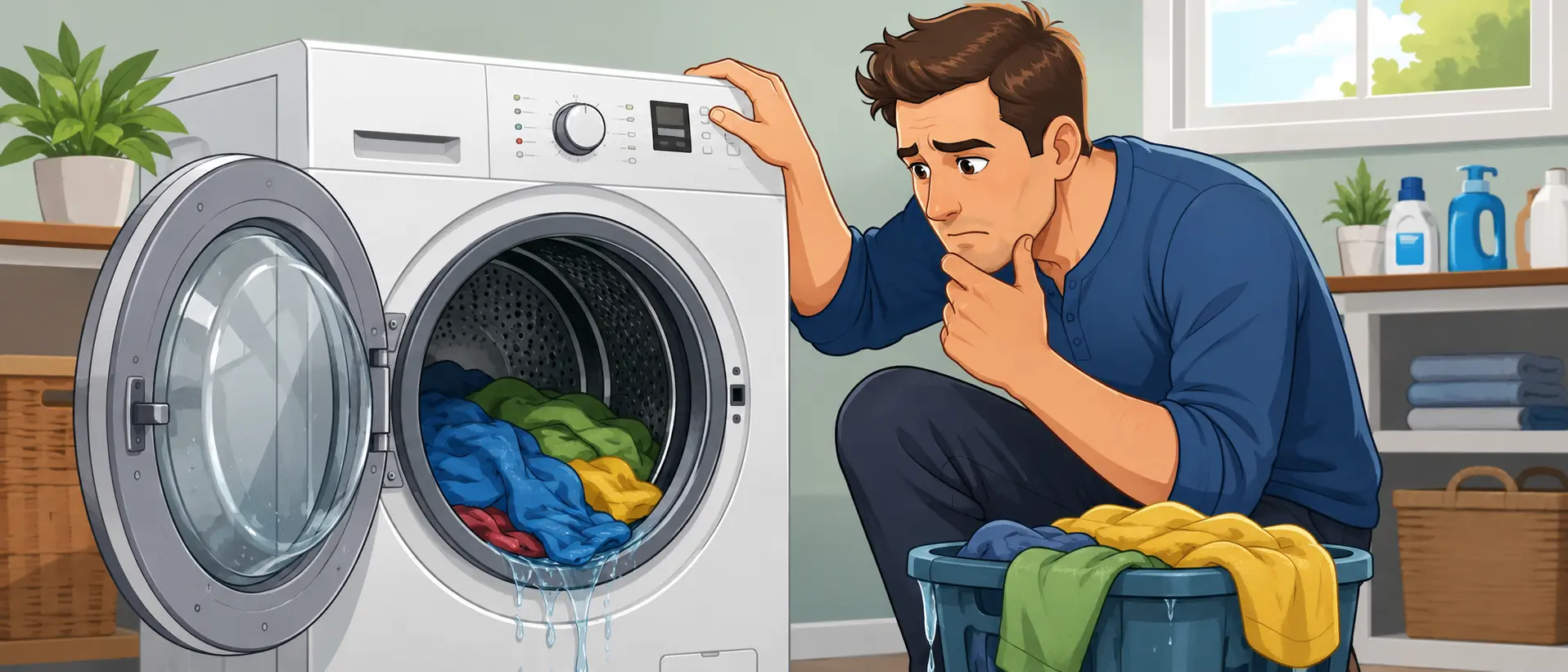
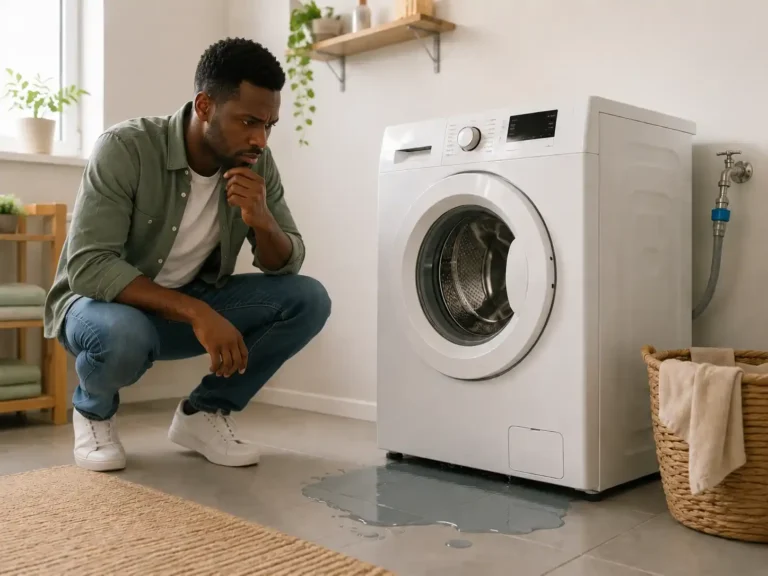
A washing machine not spinning can leave clothes soaking wet . This means , the machine has developed a major fault. In many cases, the problem is something simpler such as an unbalanced load, the wrong spin setting, poor drainage or a door-lock issue.
This guide shows how to fix a washing machine that won’t spin, starting with the easiest checks before moving to the belt, motor and other mechanical causes. It also covers situations where the washing machine spin cycle is not working, or the machine is not spinning and draining properly.
How to Fix a Washing Machine That Won’t Spin
Before assuming the motor or drum has failed, start with the things you can check without dismantling the machine.
First, remove some of the laundry if the drum is tightly packed. Spread the remaining clothes around the drum rather than leaving one heavy towel, blanket or pair of jeans sitting on one side.
Next, check the selected programme. Make sure No Spin, Rinse Hold or a very low spin speed has not been selected. Some delicate programmes deliberately reduce the final spin speed to protect clothing.
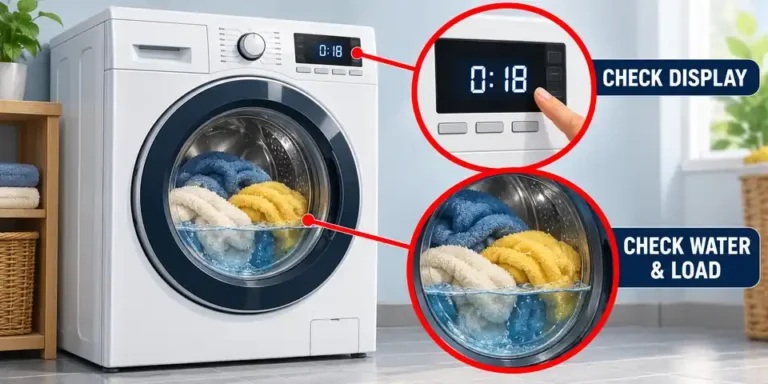
Look through the door before starting another cycle. If there is still water inside the drum, deal with the drainage problem first. Many washing machines will not enter a full-speed spin while they are still holding water.
Then close the door firmly and try a dedicated Spin or Drain & Spin programme if your machine has one.
If it still refuses to spin, the symptoms you see next can tell you where to look.
Washing Machine Spin Cycle Not Working? Check the Programme First
A washing machine spin cycle not working does not always mean that a component has failed.
Modern washers change their spin behaviour according to the programme, load and information coming from sensors inside the machine. A cotton cycle, for example, may allow a much higher final spin than a delicate or wool programme.
Check the control panel for:
- No Spin
- Rinse Hold
- reduced spin speed
- delicate or hand-wash programme
- an unfinished or paused cycle
If the machine lets you select the spin speed manually, choose an appropriate speed and run a test with a small, evenly distributed load.
Do not judge the machine only by watching it for a few seconds. During a normal cycle, the drum may rotate slowly, stop and change direction before the high-speed spin begins.
If the washer completes a dedicated spin cycle normally after you change the programme, the machine itself may be fine.
Washer Off Balance? Rebalance the Load Before Trying Again
An uneven load is one of the easiest spinning problems to correct.
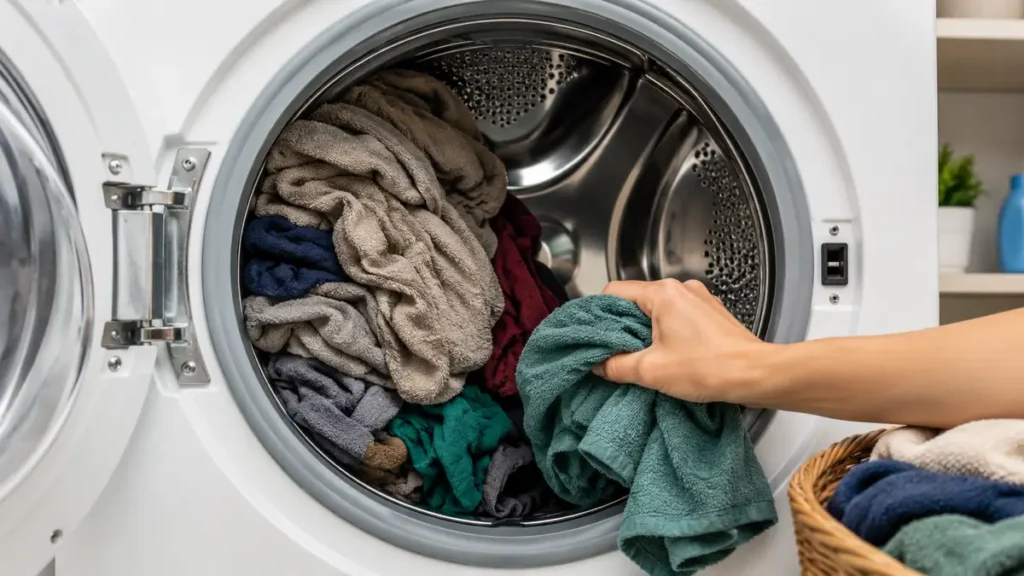
A washer can become unbalanced when heavy items gather on one side of the drum. Towels, bedding, bath mats, trainers and thick clothing are common examples.
The machine may try several times to redistribute the load. You might notice the drum turning slowly in both directions, the timer appearing to pause, or the machine beginning to spin and then slowing down again.
Open the door once it is safe to do so and spread the laundry more evenly.
If you are washing one heavy item, adding a few suitable items can sometimes help balance the weight. If the drum is overloaded, remove some laundry instead.
Then run the spin cycle again.
Repeated balance problems with ordinary loads can point to something beyond the laundry itself, such as poor machine levelling or worn suspension components. That deserves separate diagnosis rather than repeatedly forcing the machine through a spin.
Samsung also identifies unbalanced loads as a common reason a washer may reduce or stop its spin cycle.
Washer Drains but Won’t Spin?
A washer that drains but won’t spin gives you an important clue: water can leave the machine, but something is preventing the drum from reaching its normal spin speed.
Start with the load and programme checks above.
Then listen to what happens when the spin should begin.
If you hear the machine trying repeatedly to start, an unbalanced load or door-lock problem may be involved.
If you hear the motor running but the drum does not move, the drive system may need attention.
If the drum turns slowly but never reaches high speed, the machine may be reacting to imbalance, a sensor problem, a weak drive system or a programme restriction.
If absolutely nothing happens when the spin stage begins, check whether the door has locked correctly and whether the machine is showing an error code.
This symptom is different from a machine that still contains water, so it is worth confirming that the drum has actually drained before moving deeper into spin-related troubleshooting.
Washing Machine Not Spinning and Not Draining?
When a washing machine is not spinning and draining, start with the drainage problem.
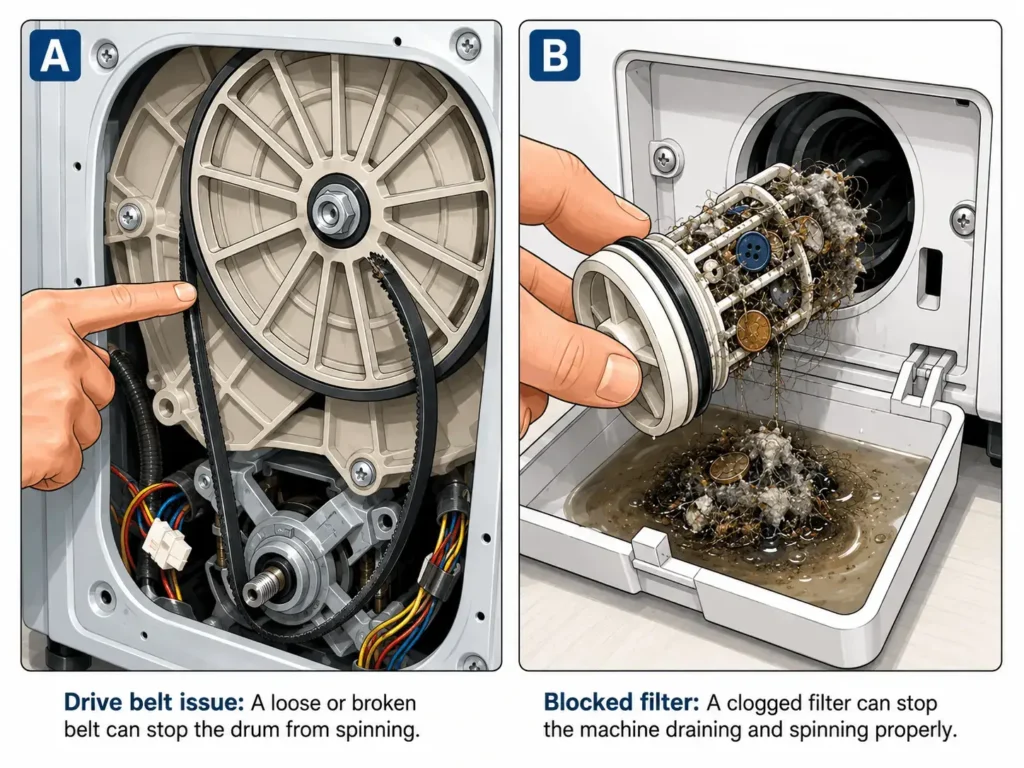
Most washers need to remove the water before they can safely accelerate the drum into a high-speed spin. A blocked filter, kinked hose or drainage fault can therefore look like a spinning problem.
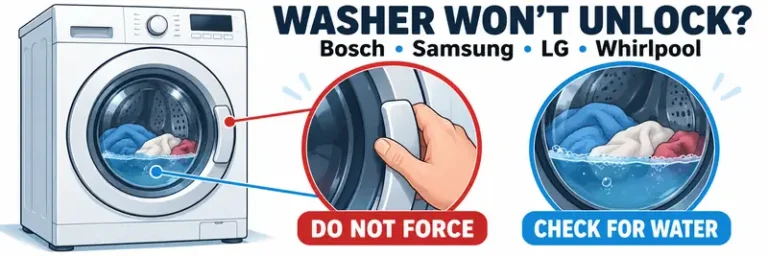
Look through the door. If you can see water sitting in the bottom of the drum, do not keep restarting the spin cycle.
Follow the separate guide on washing machine not draining to check the filter, drain hose, waste connection and other common drainage problems.
Once the machine can drain normally, run another spin cycle.
If it drains completely but still refuses to spin, return to the spin-specific checks on this page.
This keeps the diagnosis simple: get the water out first, then test the spin.
Drum Not Spinning in the Washing Machine? Check How It Moves by Hand
If the drum is not spinning in the washing machine at all, a simple manual check can reveal useful information.
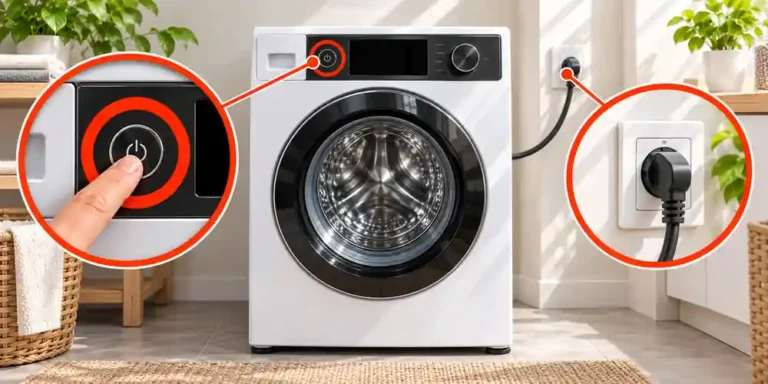
Switch the machine off and unplug it before touching the drum.
Empty the washer and gently rotate the drum by hand.
You are not trying to force it. You are checking how it feels.
The drum turns smoothly
If the drum rotates normally by hand but does not move during a wash or spin programme, the problem may be related to the drive, motor, door lock, sensor or electronic control system.
The drum feels unusually stiff
A drum that is difficult to turn may have a mechanical problem.
Do not force it through resistance. Grinding, scraping or a drum that appears seized deserves professional inspection.
The drum turns but feels unusually loose
Excessive movement, knocking or obvious looseness can point to a mechanical issue involving the drum support, bearings or suspension.
Again, this is different from a normal spin-setting problem.
The drum moves during washing but not during the final spin
That suggests the drive can move the drum at low speed. Look more closely at load balance, drainage, spin settings and faults that prevent the machine from reaching high speed.
Samsung’s current UK troubleshooting guidance also recommends checking whether the drum physically turns when the machine is empty.
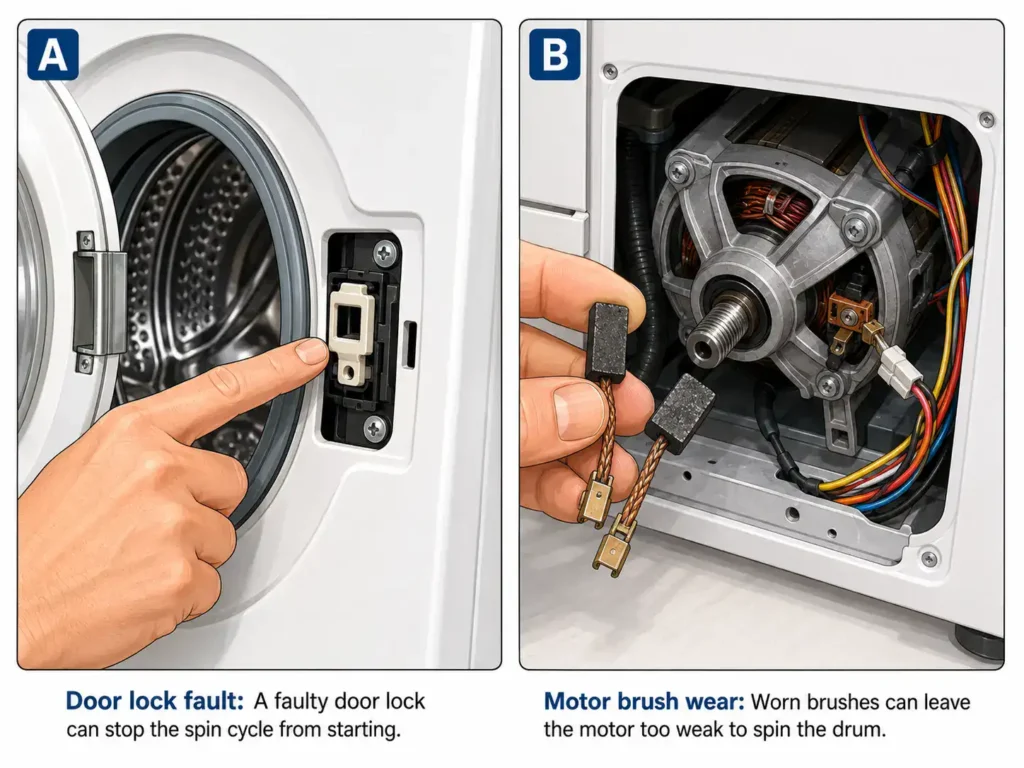
How to Fix a Washing Machine Spin Cycle When the Door Will Not Lock
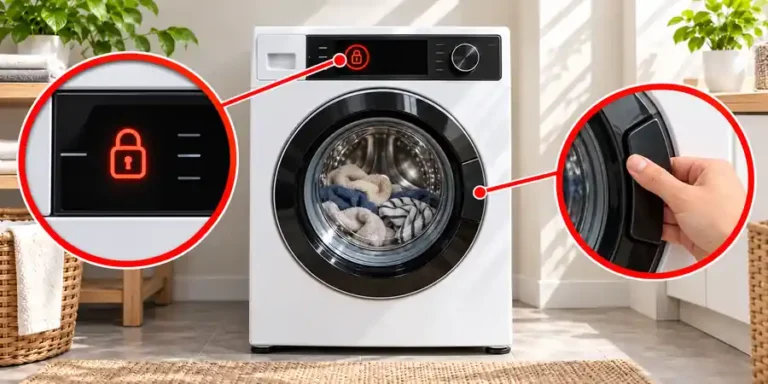
The washer needs to know that the door is securely closed before allowing a high-speed spin.
Front-loading machines normally use a door-lock mechanism. Top-load washers may use a lid switch or lid-lock system.
Check that no clothing is trapped between the door and seal.
Open the door and close it firmly. Listen for the normal locking sound when a cycle begins.
Also inspect the latch area for obvious detergent build-up or debris that could prevent the door from closing properly.
If the machine repeatedly clicks, displays a door or lid error, or starts filling but will not progress into the normal cycle, the lock system may be involved.
Do not bypass a door or lid safety switch. High-speed spinning creates considerable force, which is why these safety systems exist.
Belt and Drive Problems Can Stop the Drum Spinning
If the easy checks are fine but the drum still will not turn, the drive system becomes more relevant.
Some washing machines use a belt between the motor and drum. Others use different drive arrangements, including direct-drive systems, so do not assume your model has a conventional belt.
On a belt-driven washer, possible symptoms include:
- motor noise without normal drum movement
- drum suddenly stopping during a cycle
- unusual slipping or squealing noises
- the drum moving by hand but not under power
A belt can stretch, slip off or break. The pulley or another part of the drive system can also fail.
Before removing any appliance panel, check the user manual for your exact model. If access involves electrical components, unfamiliar disassembly or moving a heavy machine into an unsafe position, this is a sensible point to use an appliance engineer.
For model-specific troubleshooting, Samsung UK provides an official guide covering spin problems, load balance, drainage and motor-related symptoms. Samsung UK washing machine spinning guide
Motor, Sensor or Control Faults
A washer that has drained correctly, has a balanced load and has no obvious programme problem may have a fault deeper inside the machine.
Possible areas include the motor, motor control system, speed sensor, wiring or main control electronics.
The exact arrangement varies considerably by brand and model.
Some machines will display an error code when they detect a motor or speed-control problem. If you see one, write the code down before switching the machine off. Search for that exact code in the manufacturer’s manual or official support information.
A useful test is to run the machine empty on a short programme and watch the drum.
If it turns normally during the wash stage but repeatedly fails only when higher-speed spinning should begin, tell the engineer exactly that. It is much more useful than simply saying, “The washer is broken.”
If the drum never turns at any stage despite the machine filling and progressing through the programme, the fault is more likely to require professional diagnosis.
Clothes Still Wet After Spin Cycle?
Clothes still wet after the spin cycle do not necessarily mean that the washer completely failed to spin.
First check the selected speed.
A low-speed spin removes less water than a high-speed setting. Delicate programmes may deliberately leave more moisture in the fabric.
Then consider the load.
One heavy item can prevent the machine from achieving full spin speed even though the programme finishes normally. An overloaded drum can cause the same problem.
Try removing some laundry, spreading the remaining clothes evenly and running a separate spin cycle.
If the clothes are still unusually wet, check whether water is draining quickly enough. A washer can sometimes drain slowly enough to complete the cycle but still struggle to perform an effective final spin.
Also listen to the final few minutes of the programme.
You should normally hear a clear difference between slow drum movement and the faster final spin. If the machine never reaches that faster stage, continue with the door-lock, drive and motor checks above.
A Five-Minute Test Before Calling an Engineer
Before arranging a repair, an empty-machine test can separate load problems from machine problems.
Remove all laundry.
Make sure the drum is empty and there is no visible water inside.
Select a dedicated spin programme, or the closest equivalent available on your model.
Watch and listen from a safe position.
If the empty machine spins normally, the previous problem was more likely related to the load, programme or balance.
If it repeatedly tries to spin but gives up, note what happens immediately beforehand.
If it drains but the drum does not accelerate, mention that when arranging a repair.
If the drum does not turn at all, despite the programme progressing normally, stop repeatedly testing it. Further diagnosis may require access to internal components.
This short test can save time because it gives you a much clearer description of the fault.
When to Stop Troubleshooting and Call an Engineer
Not every washing machine not spinning problem should turn into a DIY repair.
Stop using the washer if you notice:
- a burning smell
- smoke or visible heat damage
- the plug, cable or socket becoming unusually hot
- repeated electrical tripping
- water reaching electrical parts
- loud metal grinding
- a seized drum
- severe drum movement or obvious mechanical damage
Also consider professional help when the basic load, programme, drainage and door checks have all been completed but the machine still refuses to spin.
Motor faults, control boards, internal wiring, bearings and some drive repairs require more than basic household troubleshooting.
A clear diagnosis is still valuable even when you do not perform the repair yourself. Knowing that the washer drains normally but does not spin, for example, immediately narrows the problem for whoever works on it.
Related Washing Machine Problems
A spinning fault can overlap with other symptoms.
If water remains in the drum, start with the washing machine not draining guide before investigating the motor or drive system.
You can also browse the Washing Machines repair guides as more troubleshooting pages are added.
Keeping each symptom separate makes diagnosis easier. A machine that will not drain, a machine that drains but will not spin, and a machine that spins but leaves clothes wet can look similar at first, but they do not always have the same cause.
Frequently Asked Questions
Why is my washing machine not spinning?
Common reasons include an unbalanced or overloaded load, the selected wash programme, water that has not drained properly, a door or lid that has not locked, or a problem with the machine’s drive system. Start with the load, settings and drainage before assuming that an internal part has failed.
How do I fix a washing machine that won’t spin?
Remove excess laundry, redistribute the load, check the spin setting, confirm that the washer has drained, close the door firmly and try a dedicated spin cycle. If the drum still does not move, check how it turns by hand while the appliance is unplugged and look for error codes or unusual sounds.
Why does my washer drain but won’t spin?
If the washer drains but won’t spin, the drainage system is probably not the main problem. Check load balance, the selected spin speed, door or lid locking and whether the drum can rotate normally. A drive, motor or sensor fault becomes more likely if those checks are normal.
Why is my washing machine spin cycle not working?
The spin cycle may be restricted by the programme, an uneven load, poor drainage or a safety system such as the door lock. Some machines automatically reduce or cancel high-speed spinning if they detect a problem.
Can an unbalanced washing machine stop spinning?
Yes. A badly distributed load can cause the washer to slow down, repeatedly redistribute the laundry or abandon the full-speed spin. Rebalance the clothes and test again before looking for a mechanical fault.
Why are my clothes still wet after the spin cycle?
The spin speed may have been too low, the load may have been unbalanced or overloaded, or the washer may not have drained quickly enough. Run a suitable spin cycle with a smaller, evenly distributed load and check whether the drum reaches full speed.
Can a blocked drain stop a washing machine from spinning?
Yes. If the washer cannot remove the water properly, many machines will not proceed to a normal high-speed spin. If water remains in the drum, troubleshoot the drainage problem first.
Should the washing machine drum turn freely by hand?
With the appliance switched off and unplugged, the drum should normally rotate without being completely seized. Some resistance is normal depending on the machine. Grinding, scraping, severe looseness or a drum that will not move should be investigated rather than forced.
Does every washing machine have a drive belt?
No. Some washing machines use a traditional belt-driven system, while others use different arrangements such as direct-drive motors. Check the specifications or manual for your exact model before assuming a belt has failed.
Get the Washer Spinning Again
When a washing machine stops spinning, start with the simple checks rather than immediately assuming the motor has failed. Load balance, spin settings and drainage can all prevent an otherwise working washer from reaching full speed.
If those checks are normal, the way the drum moves, the sounds the machine makes and whether it drains correctly will help narrow the problem further.
If there is still water inside the drum, continue with the washing machine not draining troubleshooting guide before moving on to deeper spin-related faults.

6 Comments
Comments are closed.