Washing Machine Shaking Violently? How to Stop It
A washing machine shaking violently during the spin cycle, can have an unbalanced load, unstable feet or transit bolts left in a newly installed front-loader. The next thing to do is, stop the cycle before checking the machine.
This guide covers Bosch, Samsung, LG and Whirlpool washers. Start with the shared quick checks, then jump to your brand’s section for model-specific guidance and signs that a repair technician is needed.
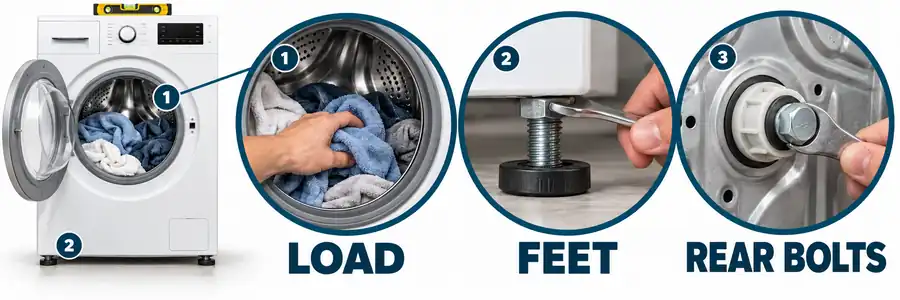
Washing Machine Shaking Violently? Check These Four Things First
Pause the cycle and wait for the drum to stop and the door to unlock before rearranging laundry. Switch off and unplug the washer before adjusting its feet or checking the rear. Get help if the machine needs moving.
| Check | What to look for and do |
|---|---|
| Load balance | Tangled bedding, one heavy item or an overloaded drum can create an uneven load. Separate and redistribute the laundry. Remove excess items and follow your model’s load limits and recommended programme. |
| Levelling feet | With the washer switched off, gently check whether the cabinet rocks. Use a spirit level across the top, both side to side and front to back. Adjust the adjustable feet until the machine is level and every foot rests firmly on the floor. Secure any locknuts as the manual directs. |
| Flooring | A flexible floor, carpet or an unstable pedestal can contribute to vibration. The washer needs a firm, stable base. Follow the installation requirements for your floor and any approved pedestal. Have a flexing floor assessed by an installer. |
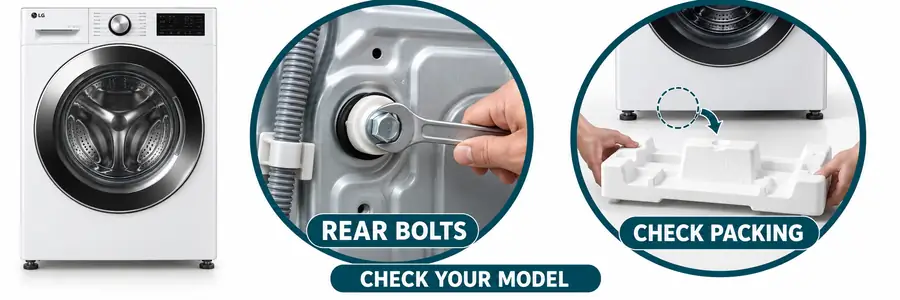
| Transit bolts — front-loaders | On a newly installed or recently moved front-loader, check whether the rear shipping bolts and spacers remain fitted. Identify and remove them using the installation manual, then keep them for future transport. Do not remove unrelated rear-panel screws. For top-loaders, check the manual for any remaining transport packaging. |
For installation examples, see Bosch’s vibration guidance and Samsung’s shaking checklist.
Bosch Washing Machine Shaking Violently: Check the Spin Warning
If your Bosch washer slows down, abandons the final spin or leaves clothes wetter than usual, look at the display before choosing another programme. On models that show E32, Bosch identifies this as the spin being interrupted because the laundry is unevenly distributed. The warning alone does not identify a broken component. Bosch UK
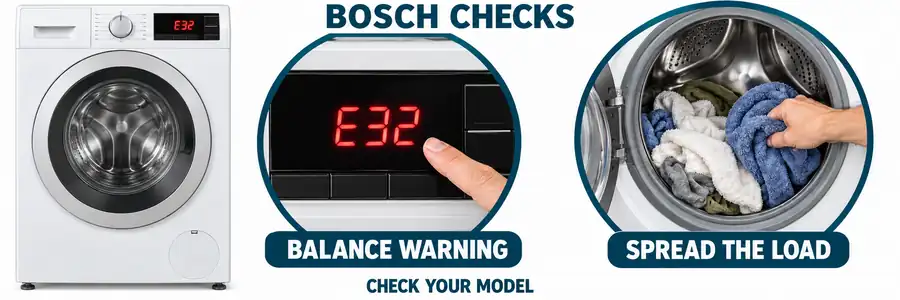
What to do when E32 appears
Once the drum has stopped and the door has unlocked, use the load-balance check above. Bosch recommends distributing suitable small and large items together. Untangle bedding that has gathered into one heavy bundle, keeping within the selected programme’s load limit.
If the installation checks are satisfactory, try the appropriate spin programme after correcting the load. Stop it if the cabinet starts moving or the drum bangs heavily.
Bosch’s E32 guidance explains the warning. Use the full model number when checking instructions for your own machine.
When the washer refuses to reach spin speed
An interrupted spin can leave laundry wet even when water has drained away. If the machine still will not spin after the load has been corrected, follow the checks for a washing machine not spinning.
Water visibly remaining in the drum needs a different investigation. Use the washing machine not draining guide before trying to extract water from the clothes again.
Samsung Washer Shaking During the Spin Cycle
Samsung balance warnings can help explain a washer that keeps slowing down or extending the cycle. Ub and UE can indicate an unbalanced load. Ur means the machine is attempting to redistribute the laundry and retry the spin; this can involve adding water and lengthening the programme.
Record the code exactly. On some Samsung models, dC refers to imbalance; on others, it concerns the door. Check the meaning against your model rather than assuming every similar-looking code describes the same fault. Samsung’s information-code guide explains these differences. samsung.com
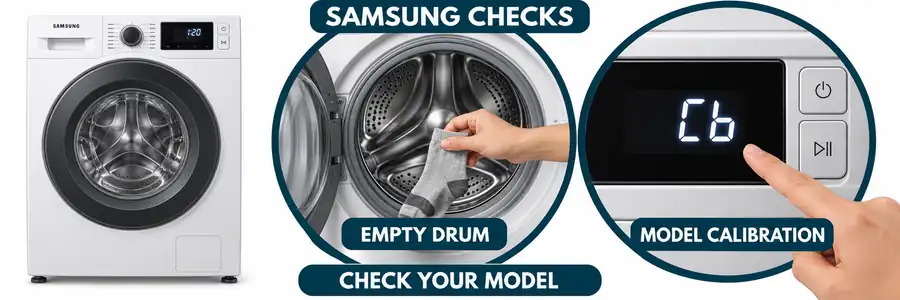
Use calibration only when your model supports it
Some Samsung washers have a calibration routine that sets their weight detection. It is normally part of installation and may be included in the manufacturer’s vibration checks. Not every model offers it, and the controls differ.
If calibration appears in your user manual:
- Complete the shared installation checks first.
- Empty the drum, including small items left behind.
- Follow the button sequence or menu shown for your exact model.
- Let the routine finish without interrupting it.
Samsung’s shaking and calibration instructions include common controls, but the starting power state and button combination can vary. Use your manual to confirm them. samsung.com
Calibration cannot repair a worn suspension or damaged drum support. If a correctly installed washer still bangs with ordinary, balanced loads, arrange a service inspection. If the main symptom is repeated interruption rather than movement, see why a washing machine stops mid-cycle.
LG Washing Machine Shakes Violently During Spin
LG front-load and top-load washers need different checks. The display can also distinguish a load the machine is trying to balance from one it has failed to correct.
Read UE, Ub and uE against your model’s instructions
LG’s front-load UE/Ub guidance identifies uneven laundry, unsuitable load size and an unlevel installation as possible causes.
On some LG top-loaders, uE appears while the washer attempts to redistribute the load. UE can follow unsuccessful attempts and indicate that the laundry needs attention. LG describes this sequence in its top-load balance-code guide. LG USA Support
Use the shared load check before restarting. Choose the programme and spin speed recommended for the items being washed. A single laundry bag or a bulky item can leave much of the wet weight on one side of the tub.
If the door remains locked, follow the steps for unlocking a washing machine door safely. Do not force the handle to reach the laundry.
A new LG front-loader may have packing beneath the tub
Rear transit bolts are not the only transport material to consider. LG’s vibration guide also shows a foam shipping support that can remain beneath the tub on the front-loaders it describes.
Check your installation instructions for the packing supplied with your model. If a support remains in place, have the installer remove it. Moving or tilting the appliance requires help; do not attempt this alone, especially with a stacked dryer above it. LG USA Support
Whirlpool Washer Shakes Violently: Match the Checks to Its Design
For a Whirlpool washer that shakes or walks during spin, establish whether you have a top-loader with an agitator or washplate, or a front-loader. The loading instructions and mounting arrangements differ.
Top-loaders with an agitator or washplate
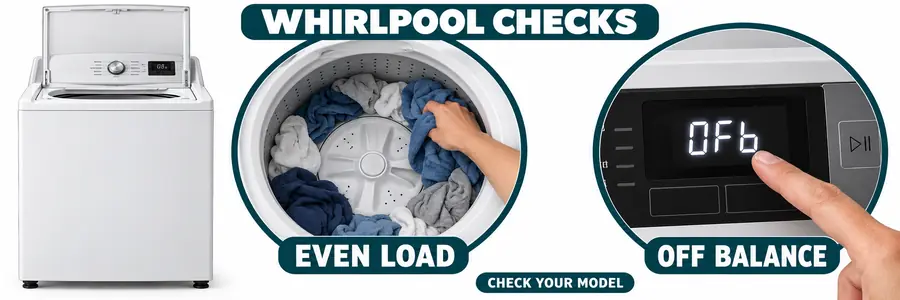
Whirlpool recommends adding clothing in loose, evenly distributed heaps around the agitator. For suitable bulky items in an impeller model, follow the loading pattern and limits in the manual. Check the item’s care label too: some large items require a commercial-size machine.
On models displaying OFb or ofb, the washer has failed to correct an off-balance load automatically. Once the lid can be opened safely, correct the laundry arrangement before restarting. Use the specified bulky-item cycle where appropriate. Whirlpool
Whirlpool’s top-load vibration guidance explains loading around an agitator or impeller. It also advises against manually adding extra water to the impeller models covered by that guidance.
Front-loaders fitted to a pedestal
If the washer sits on a pedestal, include that assembly in the installation check. Loose mounting screws, insecure pedestal feet or an incorrectly fitted base can allow movement even when the washer looks level.
Follow the instructions for the washer and its approved pedestal together. Do not assume a foot-adjustment method for a floor-standing machine applies unchanged to a pedestal installation. Whirlpool’s front-load vibration checklist covers these mounting checks.
A tapping sound at the back can also come from an inlet or drain hose striking the cabinet. With the appliance off, inspect the surrounding space and use the hose securing method in the installation instructions. Leave hoses free from sharp bends. If water appears, stop using the washer and check why a washing machine leaks. Whirlpool
Washing Machine Level but Still Shaking? When to Arrange a Repair
A centred spirit-level bubble does not confirm that every foot is firmly supported. Recheck stability with the machine off, including any pedestal and the floor beneath it.
A washing machine shaking violently despite a suitable load and correct installation may have an internal fault. Most front-loaders use springs and shock absorbers or dampers to control tub movement. Many top-loaders use suspension rods, although designs vary. Worn bearings, damaged drum supports or counterweight problems can also contribute to vibration.
These are possible causes, not diagnoses from the sound alone. A technician needs the model details and an inspection before identifying the failed part. iFixit’s washing-machine shaking guide describes the different suspension arrangements and other mechanical causes. iFixit Troubleshooting
Stop using the machine if it walks across the floor, repeatedly strikes its cabinet, develops a leak or makes harsh metal-on-metal noises. If water has reached the plug or socket, do not touch them; get professional help. Otherwise, switch off and unplug before any inspection. Do not reach beneath it while it is running or remove cabinet panels to watch the mechanism during a powered cycle.
Before booking a repair, note:
- The full model number and any displayed code.
- Whether shaking began after installation or a move.
- Whether it happens with every load or mainly bedding and towels.
- Whether water drains and the final spin completes.
If safe, a short recording taken without approaching the moving machine can help explain the symptom to the technician.
Frequently Asked Questions
How do I stop a washing machine shaking violently during spin?
Stop the cycle, correct the load and complete the four installation checks above. Then follow the section for your brand and model. If it still moves or bangs with normal loads, arrange an inspection instead of repeatedly restarting it.
Why does a brand-new washing machine shake?
For a new front-loader, remaining transit bolts or transport supports are installation checks to make first. Uneven support, unsuitable flooring and an unbalanced first load are other possibilities. A top-loader may have different packing, so use its installation instructions.
Can a washer be level but still vibrate?
Yes. A foot may lack firm contact, the floor may flex, or the load may gather on one side. Persistent vibration after those checks can also come from the suspension or drum-support system. Being level does not rule out these causes.
Will reducing the spin speed solve excessive shaking?
A lower permitted speed can help with a load that is difficult to balance, particularly bulky laundry. Follow the programme and fabric instructions. If the washer continues moving or striking its cabinet, stop it and investigate the cause.
Do anti-vibration pads fix a shaking washer?
Suitable non-slip pads may help movement on an otherwise appropriate floor when the manufacturer permits them. They cannot correct remaining transit bolts, an uneven load or worn suspension parts. Follow the installation requirements before adding pads or changing the base.
Do Bosch, Samsung, LG and Whirlpool use the same suspension parts?
No. Parts, mountings and access arrangements depend on the model, including whether it is a front-loader or top-loader. Match replacements to the complete model number and the diagnosed fault; similar-looking parts are not proof of compatibility.