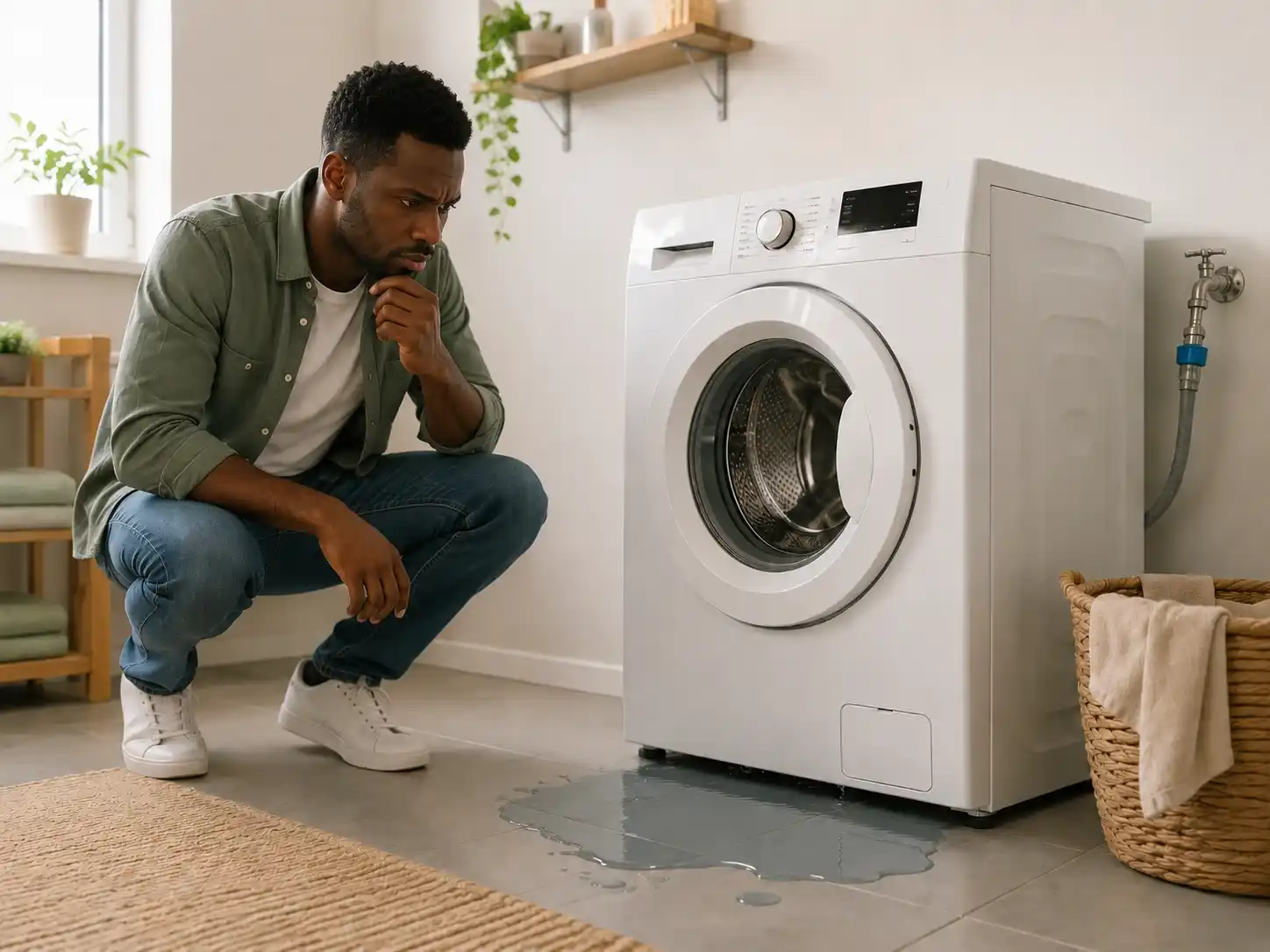
Why Is My Washing Machine Leaking? 8 Causes & Quick Fixes
A washing machine leak, can come from something as simple as a loose hose or overfilled detergent drawer. But water underneath the machine can also point to a damaged seal, filter, pump or internal hose. The important thing is to work out where the water is coming from and when the leak starts.
If your washing machine is leaking during filling, spinning, draining or even while switched off, each pattern gives a useful clue. Start with the easy checks you can do from outside the machine before considering any internal repair.
This guide covers eight common causes of washing machine leaks, including leaks from the bottom, door, hoses and detergent drawer, with practical checks to help you narrow down the source safely.
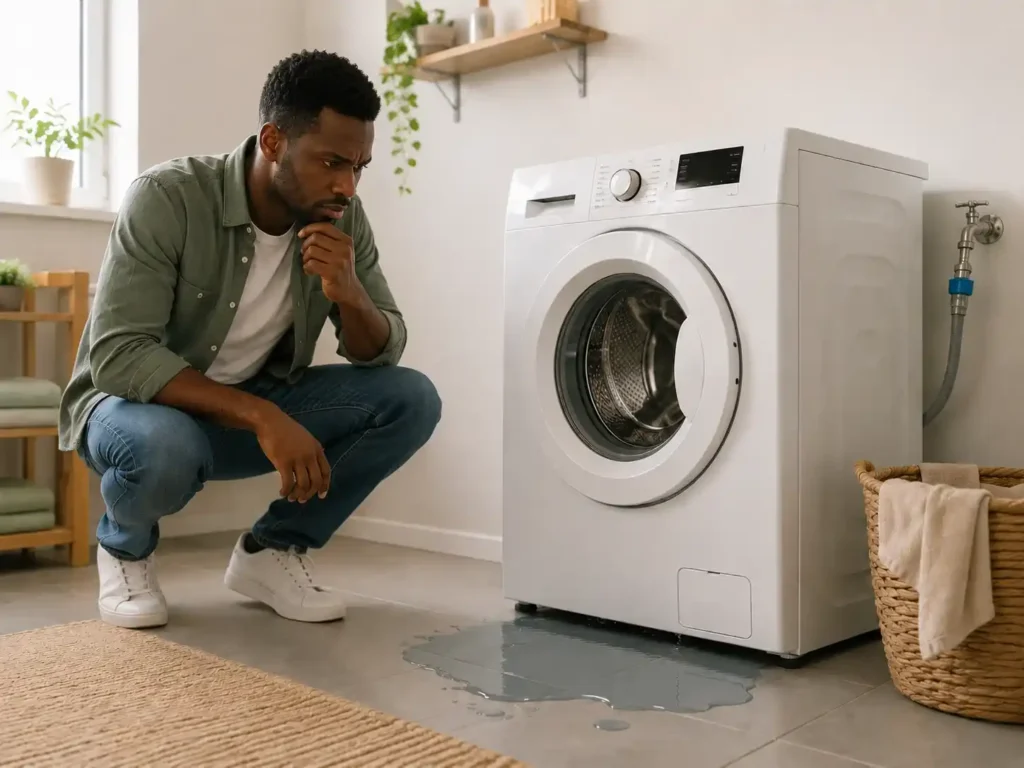
Start by Finding Where and When the Leak Starts
Before moving the washing machine or reaching for tools, watch where the first drops appear. A puddle at the front, back or underneath can narrow the problem considerably, and the point in the wash cycle when the leak begins gives another useful clue.
Stop the programme if the leak is active, turn off the water supply and disconnect the appliance from the mains if you can do so safely from a dry area. If water has reached the plug, socket or electrical cable, avoid touching the appliance while standing on a wet floor.
A quick check can often point you in the right direction:
| What you notice | Start checking |
|---|---|
| Water at the back | Inlet hose, tap connection, drain hose |
| Water around the door | Door seal, trapped clothing, excessive foam |
| Water near the detergent drawer | Drawer blockage, detergent build-up, too much detergent |
| Water near the lower front panel | Filter cap or filter seal, if your model has an accessible filter |
| Water underneath the machine | External hoses first, then a possible internal leak |
| Leak mainly while filling | Inlet hose, dispenser system, water inlet components |
| Leak mainly while draining | Drain hose, filter area, pump or internal drain hose |
| Leak during the spin cycle | Existing hose or seal leak, excessive foam, movement or imbalance |
| Water appears while switched off | Water-supply connection, tap or inlet-valve fault |
The location of the water is one of the most useful first clues. Bosch’s washing machine leak guidance also separates troubleshooting by whether water appears at the front, back or underneath the appliance.
Bosch specifically confirms that front leaks can involve the door, detergent drawer or filter area, while leaks at the back commonly point towards the fill or waste-water hoses.
Why Is My Washing Machine Leaking From the Bottom?
If you’re wondering why your washing machine is leaking from the bottom, don’t assume the faulty part must be directly underneath the drum. Water can run down a hose, cabinet panel or pipe before collecting beneath the appliance.
Start outside the machine. Look behind it for wet hose connections, check around the door and detergent drawer, and inspect the accessible filter area if your model has one. A leak that appears underneath can originate somewhere higher up.
Beko notes that water underneath a washer may be connected to damaged hoses, connectors or an internal leak, while Bosch advises checking the other common leak points before assuming there is an internal fault.
If everything visible is dry but water continues appearing directly beneath the cabinet, stop using the machine until the source is identified. At that point, a pump, valve, internal hose or another component may need inspection.
1. Check the Water Inlet Hose and Connections
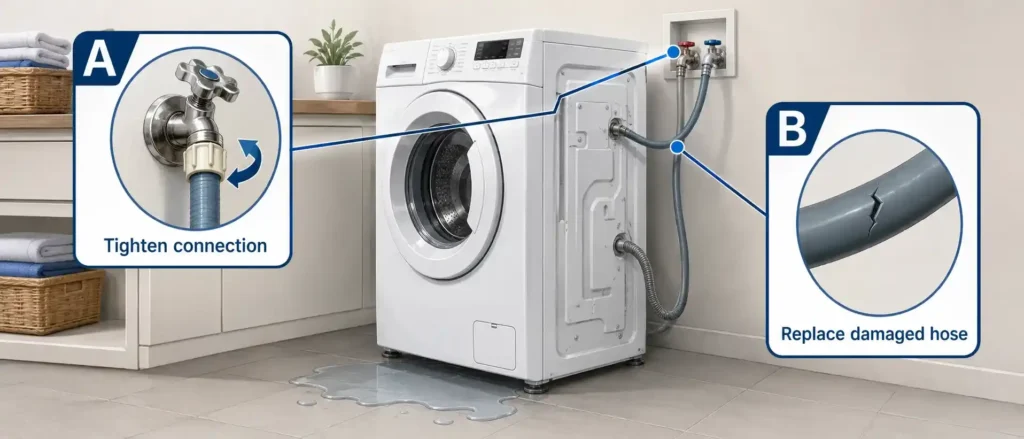
The water inlet hose is one of the easiest places to check and one of the first places worth looking if the washer leaks while it is filling. A loose connection, worn sealing washer, crack or split can allow water to run down the rear of the appliance and collect underneath.
Move the machine only enough to see behind it without stretching the hoses. Check the connection at the water tap and the connection where the inlet hose meets the washer. Look for moisture, mineral marks, cracks or a slow drip.
Quick fix: If a threaded connection is slightly loose, turn off the water supply and reseat it correctly. Tighten it by hand rather than forcing it with pliers. Replace a hose that is cracked, swollen, split or otherwise damaged.
Electrolux specifically recommends checking both inlet-hose connections and advises tightening them by hand rather than with tools, which can damage the fitting or threads.
Do not wrap or patch a failing pressurised inlet hose as a permanent repair. A sound replacement hose is the safer option.
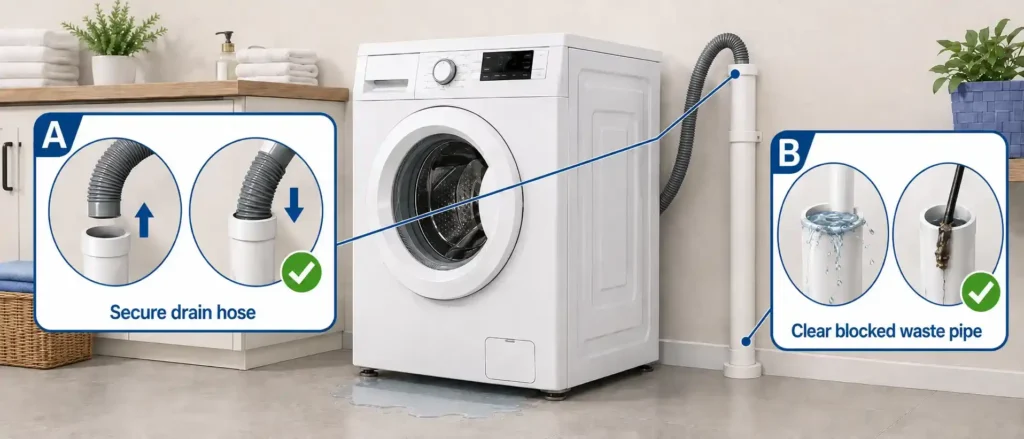
2. Inspect the Drain Hose and Waste Connection
A drain hose problem often shows itself later in the programme, when the washer starts pumping dirty water out. A split hose, loose connection or overflowing waste pipe can make it look as though the washing machine itself is leaking.
Check the visible length of the drain hose for cracks, rubbing marks, flattened sections and loose fittings. Also look at the point where the hose enters the household waste pipe or connects beneath a sink.
Water backing up from a blocked household waste connection can spill around the drain hose, so identify whether the water is actually coming from the washer or from the plumbing it drains into.
If the machine is also leaving water inside the drum or struggling to empty, use our Washing Machine Not Draining? 8 Common Causes and How to Fix It guide. That is a separate drainage fault and may explain why water is backing up or appearing during the drain stage.
3. Look Closely at the Door Seal
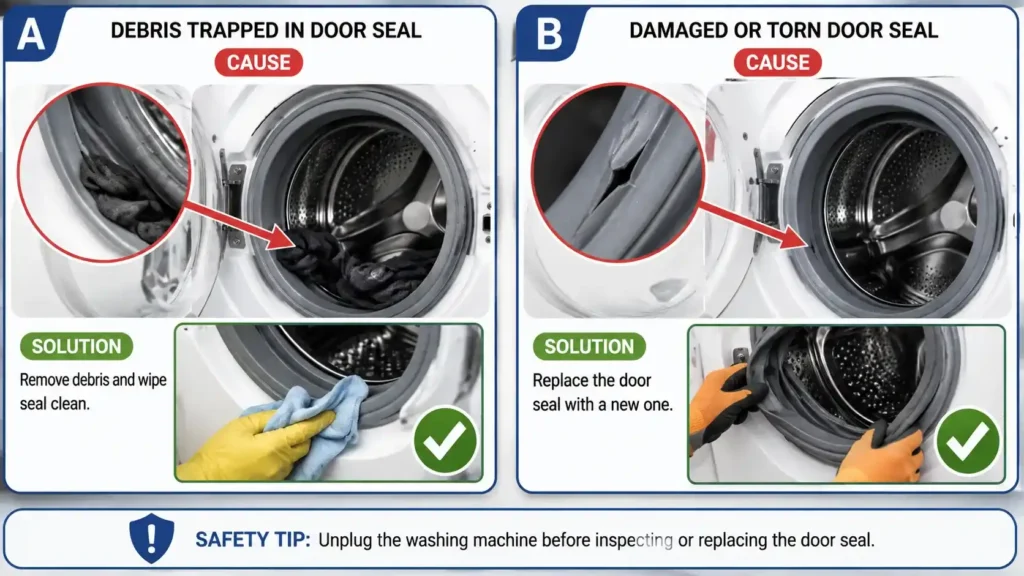
Water leaking from the front of a front-loading washing machine often points towards the door area. The rubber seal needs a clean, uninterrupted contact with the door to contain water while the drum is moving.
Open the door and inspect the visible seal and its folds. Look for a sock, piece of fabric, hair, detergent residue or another small object trapped against the sealing surface. Then check for cuts, punctures, distorted rubber or a section that has pulled out of position.
Quick fix: Remove trapped debris and wipe the sealing surface with a damp cloth. Make sure clothing is fully inside the drum before closing the door.
Bosch and Electrolux both recommend inspecting the door seal and removing debris from the sealing area when troubleshooting a front leak.
A torn door gasket is different. Replacing one can require model-specific disassembly, springs or retaining bands, so check the service information for the exact model number rather than following a generic internal diagram.
4. Clean the Detergent Drawer
A leak from the upper front of the machine can sometimes be water overflowing from the detergent dispenser rather than a failure deep inside the washer.
Powder, fabric conditioner and limescale can build up in the drawer and the channels around it. If incoming water cannot flow through normally, it may spill forwards and run down the front panel.
Remove the drawer according to your machine’s instructions, rinse away detergent residue and clean the accessible channels. Refit it fully before testing the appliance again.
Electrolux lists a blocked or dirty detergent drawer among the common causes of washing-machine leaks and recommends removing accumulated detergent and limescale.
If water still pours from the dispenser after it has been cleaned, stop there rather than dismantling the dispenser housing without model-specific instructions.
5. Check the Drain Filter and Filter Cap
Some front-loading machines have a user-accessible drain-pump filter behind a small panel near the bottom of the appliance. If the filter was recently cleaned and the washer has started leaking from the lower front, check that area carefully.
A filter cap that is cross-threaded, not fully seated or has debris around its sealing surface may allow water to escape during drainage.
Quick fix: With the washer unplugged and residual water safely drained as described in your owner’s manual, check that the filter is clean and correctly refitted. Wipe debris away from the sealing surface and tighten the cap securely by hand.
Not every washing machine has the same filter arrangement or access point. Some models do not provide a user-serviceable pump filter at all, so use the manual for your exact appliance rather than trying to locate one from a generic illustration.
If your washer is also failing to remove water normally, the separate washing machine not draining guide will help you diagnose that symptom without duplicating the repair here.
6. Reduce Excess Detergent and Foam
Not every apparent leak begins with a broken component. Too much detergent can produce excessive foam, particularly when the dose is high for the load size or local water hardness.
Foam can work its way towards the door or dispenser and eventually collapse into water on the floor. That can make a detergent problem look like a failed seal.
For the next appropriate wash, use the detergent manufacturer’s recommended dose for the load and water conditions. Make sure the product is intended for automatic washing machines.
Electrolux identifies excessive detergent and over-foaming as possible contributors to water leakage, and Bosch also recommends correcting detergent dosage when investigating a leak.
If the floor remains dry after the excess foam has cleared and the correct dose is used, you may have found the cause without replacing anything.
7. Check the Load and Make Sure the Machine Is Level
A heavily packed drum can interfere with the door seal, particularly if clothing becomes trapped between the glass and rubber gasket. An uneven machine can also move more than it should during the wash and spin stages.
Open the door and make sure no fabric is pinched across the sealing surface. Avoid forcing another item into an already full drum simply because the door will still close.
Next, check whether the washer sits firmly on all its feet. It should not rock when gently pressed at opposite top corners. If adjustment is needed, follow the levelling instructions supplied for the model.
Electrolux notes that an overloaded drum can prevent the door from sealing correctly, while Bosch includes correct levelling among its checks for water appearing at the front of a machine.
If the appliance is also failing to reach a proper spin or repeatedly stops before spinning, see our Washing Machine Not Spinning? How to Fix It guide for that separate symptom.
8. When the Leak Is Coming From Inside the Machine
Once the external hoses, door, drawer and accessible filter have been ruled out, the leak may be inside the cabinet. Possible sources include an internal hose, drain pump, water inlet valve or another part of the machine’s water path.
This is where a generic repair article should stop giving exact component locations.
The position of a pump, motor, valve, wiring harness or internal hose varies by manufacturer and model. Even machines from the same brand may use different layouts. An illustration showing one supposed universal position can send you to the wrong part of the appliance.
If you can see water emerging from inside the cabinet, unplug the washer, turn off its water supply and find the full model number. Use the manufacturer’s service information for that specific appliance or arrange a repair.
Electrolux advises professional inspection when external checks have been completed but water still appears to be coming from inside the appliance.
What the Timing of the Leak Can Tell You
A puddle tells you that water escaped; when it escaped often tells you more. Watch a short cycle only if the appliance can be operated safely and the leak is minor enough that doing so will not create an electrical or flooding risk.
Leaks while the machine is filling
Start with the water-supply hose, its connections and the detergent dispenser. Water appearing almost immediately after the fill valve opens points towards the incoming-water side of the machine.
Leaks during washing
Look at the door seal, dispenser area and excessive foam. An internal hose can also leak while water is circulating, but internal diagnosis should be based on the exact model.
Leaks while draining
The drain hose, accessible filter area and drain system become more likely. If the drum is also staying full of water, treat the drainage problem as a separate symptom rather than assuming everything is caused by the leak.
Leaks during the spin cycle
A spin leak does not automatically mean the motor or drum is faulty. Water may be escaping through an existing weak seal or hose while movement makes the problem more noticeable.
If the machine is shaking heavily or failing to spin at all, diagnose that problem separately using the washing machine not spinning guide.
Water appears while the washer is switched off
Check the water tap, inlet-hose connections and surrounding plumbing first. If water is entering the drum even though the machine is off, the inlet-valve system may need attention. Electrolux notes that a machine drawing water while switched off can be linked to the water valve.
Can You Use a Washing Machine That Is Leaking?
A washing machine should not normally leak, even if the amount of water seems small. A slow drip can damage flooring or cabinets and can become more serious without warning.
If the source is obvious and external — for example, a connection that has been safely reseated — dry the area completely before testing the washer.
Do not continue running it when water is still escaping from an unknown location, a hose is visibly damaged, the door seal is torn, or moisture is reaching electrical parts.
Manufacturer guidance takes the same approach. Electrolux advises disconnecting the appliance and addressing active leaks promptly rather than continuing normal use.
When Is It Time to Call a Washing Machine Repair Engineer?
Simple external problems are worth checking first. A loose hose connection, dirty detergent drawer or incorrectly seated filter can sometimes be corrected without opening the cabinet.
Professional diagnosis makes more sense when the leak remains after those checks, comes directly from inside the appliance, returns during several programmes, or involves a damaged component that requires panel removal. Electrolux’s washing machine leak guidance also recommends arranging a repair when external hoses and connections have been checked but the appliance continues to leak, or when water appears to be coming from inside the cabinet.
Stop using the machine if you notice electrical problems, sparking, a burning smell, damaged wiring or a leak you cannot control. Recurring leaks should also be investigated rather than repeatedly mopped up and ignored.
Before booking a repair, write down the full brand and model number and note exactly when the leak occurs. “Water appears underneath about two minutes into draining” gives a technician far more useful information than simply saying “the washer leaks.
Frequently Asked Questions
Why is my washer leaking from the bottom?
Water underneath a washer can come from a loose inlet connection, drain hose, filter area, door leak that has travelled underneath the cabinet, or an internal component. Check the visible external sources before assuming the fault is directly beneath the drum.
Why is water leaking from my washing machine only when it drains?
Start with the waste-water side of the system. Inspect the drain hose, its connection to the household waste pipe and any user-accessible drain filter. If the machine also leaves water inside the drum, there may be a separate drainage problem.
Can too much detergent make a washing machine leak?
Yes. Excess detergent can create heavy foaming, and the foam may escape around the dispenser or door area before collapsing into water. Use detergent intended for automatic washers and follow the recommended dose for the load.
Why is my washing machine leaking from the door?
Check for clothing caught between the door and seal, dirt or detergent on the sealing surface, and cuts or tears in the rubber gasket. A visibly damaged seal usually needs replacement using the correct procedure and part for that model.
Why does my washing machine leak only during the spin cycle?
Spin movement can expose a weak door seal, hose connection or other existing leak. Excessive vibration may make the water easier to notice as well. Check the leak location rather than assuming the spin system itself is responsible.
Can a washing machine filter cause a leak?
Yes, on machines with a user-accessible drain filter. A cap that has not been refitted correctly, damaged sealing surface or trapped debris can allow water to escape. Always follow the filter procedure for the exact model.
Is a small washing machine leak normal?
No. A functioning washing machine should keep its water contained. Even a small recurring leak deserves attention because it may worsen or damage the surrounding floor and cabinets.
Do I need a new washing machine if it leaks from underneath?
Not necessarily. Many leaks are caused by hoses, connections, seals or other replaceable parts. Whether repair makes sense depends on the failed component, the age and condition of the machine, and the cost of the repair.
Stop the Leak Before It Becomes a Bigger Problem
When water starts appearing around a washer, begin with location and timing rather than guessing at parts. Check the inlet and drain hoses, door seal, detergent drawer and accessible filter first. Those checks can often reveal where the water is escaping without opening the machine.
If the washing machine is still leaking from underneath after all visible connections and seals have been checked, leave the internal diagnosis to information for your exact model or a competent repair engineer. That avoids replacing the wrong component — and avoids relying on a generic machine layout that may not match yours.
6 Comments
Comments are closed.